Northern Bobwhites are plump small quails belonging to the species of Odontophoridae or New World quails. Due to their unusual and distinct loud calls, they are called Bobwhites. They mostly live on the grounds. They have mysterious ways of living in the woods and display a range of behavioral patterns. Though they are nearly a threatened species, they can still be spotted as the only quails dwelling in North America.
Scientific Name
The Northern Bobwhite is known as Colinus virginianus scientifically.
Description
Color: The complex arrangement of feathers in males displays shades of brown, white and chestnut. Throat and region around the eye are white appearing as a stark contrast to the head’s black plumage. Females display similar shades only exception being the brown plumage on the head. Juveniles have brownish body plumage. Their bellies have streaks of brown and white. Bills are blackish in color.
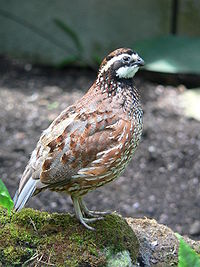
Picture 1 - Northern Bobwhite
Size: These Northern Bobwhites grow up to 10 inches
Wingspan: Their wingspan is around 15 inches.
Shape: They are round shaped birds.
Weight: Adults weight around 5 to 6 ounces and hatchlings weigh around one fourth of an ounce.
Scientific classification
Kingdom: Animalia
Phylum: Chordata
Class: Aves
Subclass: Neornithes
Infraclass: Neognathae
Superorder: Galloanserae
Order: Galliformes
Family: Odontophoridae
Genus: Colinus
Species: C. virginianus
Subspecies
21 subspecies of the bird have been confirmed to exist in three groups.
Distribution and Range
Its range stretches across the North America, Caribbean nations and Mexico. Among the noticeable quails dwelling in North America, this bird is quite common. They are generously distributed across the Great Lakes, Massachusetts, south Minnesota and parts of Pennsylvania. It also extends towards the south of Nebraska, Oklahoma, Kansas, extreme west of Texas, Cuba and east of Mexico.
They are an introduced species of game birds in Washington, Oregon and New Zealand. Though they are native to US, they are not found at higher altitudes of the Appalachian Mountains and southern regions of Florida.
Habitat
These quails can be spotted in the edges of woods, massive open woodlands, meadows, grasslands and cultivated fields. These places provide them with shade as well as plenty of food, which fulfils their primary habitat requirements. It cannot bear extreme heat, which is why they live in areas where they can receive maximum cover for themselves. The air temperature should be moderate else it may prove to be fatal to their survival. For maximum protection these quails inhabit grapevines, hazel and raspberry thickets. In Ontario they inhabited savannah type grassland but then it was transformed into farm land, which also suited them.
Diet
Varying seasons influence their diet. In general, Northern Bobwhite’s food items comprise plants, seeds, fruits as well as invertebrates like arthropods. Seeds seem to be their staple as they feed on them all through the year. They eat acorns and these are highly preferred by them when they are available but in their absence they subsist on Grass seeds. With the setting of spring, they start eating more insects and plants.
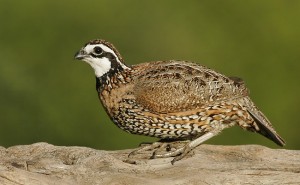
Picture 2 - Northern Bobwhite Photo
Call
A range of sound is emitted by the bobwhites. A distinct “bob-white” sound among other 19 calls can be identified. These sounds are slower in the beginning, but gradually it raises its pitch. Warning calls in different forms are also heard coming from them. Its song is clearly heard like a whistle.
Behavior
The Northern Bobwhites display certain behavioral characteristics like every other bird. These are some of them:
- They are typically shy and appear to be mysterious in their ways.
- If they sense threat, they resort to camouflaging in order to avoid any sort of intervention. They become absolutely still and constrict their form whenever they are scared.
- Seasonal changes might influence their social behavior. They form groups by the end of summer continuing till winter but again become solitary or are seen in pairs as soon as winter ends.
- It may adopt low flight to protect itself from predators. Otherwise it prefers to walk around.
- To ward off the heat, they resort to panting and seek cooler spots by digging up the soil.
- They generally eat when temperatures are cooler either early in the mornings or later in the evening.
- They eat together in coveys that are formed with 10 to 15 of them together.
- Bobwhites disperse from their coveys with the commencement of spring.
- These birds generally remain close to their covers while feeding to hide themselves from their predators.
- Males call for mating by displaying a number of postures which exposes their plumages to the females.
- These birds generally remain inactive throughout the year barring the breeding season, when they disperse.
- Sometimes females may lay eggs in other female’s nest.
Life Span
Northern Bobwhite quails have an average life span of one year but they might live for five years in the wilderness.
Life Cycle
Life of the hatchlings begins after 23 to 25 days of incubation. Right after emerging out, they are unable to fly hence they walk around in a vigilant manner. During the first 2-3 weeks juvenile bobwhites are quite vulnerable as they cannot fly to save themselves from predators. Almost after 4 weeks, the juveniles can fly with the help of sturdy wings that develop during this time. They mature in 15 week’s time.
Mating
Mating seasons commence by May when the males start preparing the mating grounds. They produce a distinct type of sound to call the females for mating which is being safeguarded by them from other males. Males also display various physical movements to secure the female’s attention, integral to courtship displays common in other birds. It is not limited to physical displays, as feeding ritual also follows it. Males call the females by displaying food in their beaks.
Flight
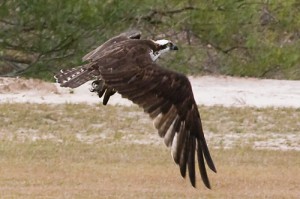
Picture 3 - Flying Northern Bobwhite
These quails are able to fly by quickly beating its sturdy wings but only for short distances. It glides some distances and may even take off in a rush when extreme conditions prevail. Usually during threats, rather than flying they scamper away deep into the nearby vegetation.
Migration
These birds are not migratory and so they reside in their permanent range.
Reproduction
Reproductive season continues till September, beginning by April. It varies geographically, but a steep rise can be noticed during the months of June. They surround their nests with grasses and leaves, after lightly digging it out. The females lay one egg at a time for a period of 10 to 15 days until all the eggs are laid.
Every brood consists of 14 to 16 eggs. With rare instances of polygamy being noticed in these birds, they are generally monogamous. Incubation period lasts between 22 and 24 days. During this time, both the male and female incubate the eggs. Hatchlings are looked after by the parent bobwhites for 15 to 16 days till they can fly like their adults. Since they are unable to feed themselves, the adults feed them initially.
Adaptation
- These birds have adapted themselves to various land types, though they are best suited to small open fields with loads of small sized vegetation.
- Their ability to produce multiple breeds may compensate for the high mortality rate of their hatchlings.
- Bobwhite quails have string claws and feet along with a tough beak which helps them eat fruits and seeds.
Predator
Raccoons, red fox, weasels, squirrels, crows, owls, hawks, dogs and snakes are some of the common predators of this bird. Degradation in natural environment which has eliminated their covers, also threatens their existence to a great extent.
Raising Northern Bobwhite Quails
Housing: Provide a living area which is not in direct contact with the floor. Placing a cloth on the wooded base of the cage will save them from moisture. Also keep the area well drained and netted to provide them a natural feel.
Feeding: Feed them with seeds and insects, after consulting with a specialist. Beside food, water should also be provided.
Care: Try to maintain stability in temperature as the bird is sensitive to excessive heat.
Conservation Status
These birds have been listed under near threatened species. As a part of Northern Bobwhite conservation initiative, several programs have been devised to stop their decline. Endangered Species Act of Ontario prevents the killing and exploitation of Northern Bobwhites. Arizona has an endangered sub-species of Northern Bobwhite birds called the Masked Bobwhite.
Interesting Facts
- In its entire lifetime, the quail requires different types of habitat for seeking covers meant for different purposes like rearing broods, roosting, feeding, nesting and loafing.
- A subspecies known as Long Island Bobwhite Quail became extinct due to massive hunting.
- Sensing danger, these birds can run really very fast.
- These birds have very high reproductive rates, often producing multiple broods throughout the whole nesting season.
Pictures
Take a look at the images of the Northern Bobwhite quails depicted here, to know how they look.
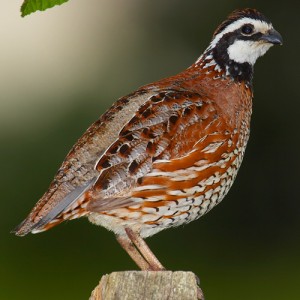
Picture 4 - Northern Bobwhite Picture
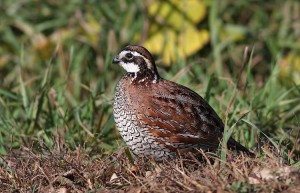
Picture 5 - Northern Bobwhite Image
Reference:
http://www.rw.ttu.edu/sp_accounts/bobwhite/bobwhite_reproduction.htm
http://animals.nationalgeographic.com/animals/birding/northern-bobwhite/
http://www.oiseaux-birds.com/card-northern-bobwhite.html
http://en.wikipedia.org/wiki/Northern_Bobwhite
No related posts.